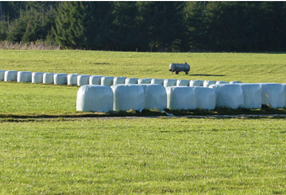
As interest grows in bio-based and biodegradable agricultural films, producers are asking whether these materials can break down reliably after use without creating new environmental risks. In Australia’s dry pastoral regions, silage plastic must withstand intense sunlight, high temperatures, and long periods of limited rainfall. The answer depends heavily on soil conditions.
Arid soils often have low microbial activity, while salinity and extreme heat can further change degradation behaviour. Comparing biodegradable silage film trials Australia with conventional UV-stabilised LLDPE helps producers understand why a film that degrades under controlled conditions may behave differently in the field.
How Arid Soil Changes Film Degradation
Biodegradable agricultural films generally depend on environmental conditions and microbial processes to break down. Moisture, temperature, oxygen availability and microbial populations can all influence degradation rates.
In arid pastoral zones, these conditions are often inconsistent. Soil may remain dry for extended periods, limiting microbial activity and slowing biological degradation. A biodegradable film incorporated into dry soil therefore may not disappear as quickly as expected from laboratory or controlled composting results.
High temperatures create another variable. Heat can accelerate some chemical and biological processes, but intense UV exposure can also cause surface weathering before the material enters the soil. The resulting degradation pathway depends on the film’s polymer chemistry, additives and environmental conditions.
Salinity Adds Another Layer of Uncertainty
Australian agricultural soils can range from relatively benign sandy profiles to highly saline or sodic environments. Elevated salt concentrations can affect the organisms responsible for biological decomposition and alter soil moisture availability.
This is important when assessing biodegradable silage film trials in Australia. Results from temperate agricultural soils cannot automatically be applied to dry inland grazing regions.
Field assessments should consider:
● Soil electrical conductivity and salinity
● Seasonal rainfall and soil moisture
● Soil temperature at different depths
● Microbial activity and organic matter
● Film thickness and polymer composition
● UV exposure before soil incorporation
● Residual fragments after the expected breakdown period
These factors provide a more useful picture than a single advertised degradation timeframe.
Conventional LLDPE Has a Different End-of-Life Profile
Traditional silage plastic is commonly manufactured from linear low-density polyethylene (LLDPE), with formulations designed to provide flexibility, strength and resistance to environmental exposure. UV stabilisers can help the material maintain its performance during storage and handling.
However, UV resistance is not the same as biodegradability. Conventional polyethylene can fragment through weathering without biological decomposition, unlike a purpose-designed biodegradable material.
For Australian producers, this distinction matters. Smaller fragments may remain in soil or around paddocks if used agricultural plastic is poorly collected. Proper recovery and recycling systems can therefore remain important regardless of whether a film is marketed as biodegradable.
What Field Trials Need to Measure
Reliable trials of biodegradable silage film in Australia should assess actual field conditions rather than rely solely on laboratory testing. Monitoring should continue beyond the onset of visible cracking, as physical fragmentation does not necessarily indicate complete biodegradation.
Useful trial measurements include:
1. Changes in film mass and tensile strength.
2. Fragment size and persistence in soil.
3. Soil moisture and temperature throughout the trial.
4. Microbial and soil-condition indicators.
5. Evidence of residual polymer material.
6. Performance across different soil salinity levels.
This approach helps distinguish genuine biodegradation from simple weathering or fragmentation.
Choosing Film for Australian Conditions
No single degradation timeline applies to every biodegradable film or every Australian soil profile. Producers should examine the manufacturer’s technical documentation and look for field evidence from comparable climates and soil conditions.
For dry pastoral operations, the key question is not simply whether a film is biodegradable. It is about whether the material provides reliable silage protection during use and has a clearly understood end-of-life pathway under the conditions in which it will actually be used.
Conclusion
The comparison between biodegradable and conventional silage plastic involves more than environmental claims on a product label. Arid soils, salinity, moisture limitations, microbial activity and extreme temperatures can all influence degradation behaviour. Field-tested evidence is essential before assuming that a biodegradable film will break down at a particular rate.
For Australian producers, compare verified field-trial data, soil conditions and end-of-life requirements before changing film systems. Choose agricultural film based on both in-field performance and its documented environmental pathway.
—
Frequently Asked Questions
1. Does biodegradable silage film break down faster in arid soil?
Not necessarily. Low soil moisture and microbial activity can slow biological degradation, even where temperatures are high.
2. Does soil salinity affect biodegradable film degradation?
It can. High salinity may influence soil microbial activity and moisture conditions, potentially changing the degradation process.
3. Is conventional LLDPE silage plastic biodegradable?
Conventional LLDPE is not designed to biodegrade like purpose-made biodegradable polymers. UV exposure may instead cause weathering and fragmentation.
4. What should Australian field trials measure?
Trials should examine film strength, mass loss, fragment persistence, soil moisture, temperature, salinity and evidence of biological degradation.
5. Can laboratory degradation results predict Australian field performance?
Not reliably on their own. Field conditions can differ substantially from controlled laboratory environments, particularly in arid and saline soils.