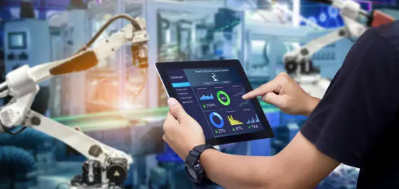
In New Zealand’s rapidly evolving industrial landscape, the demand for precision, reliability, and seamless integration is more critical than ever. Among the many automation technologies available, Siemens controllers have emerged as the top choice for businesses aiming to optimise production, improve efficiency, and future-proof operations. With their advanced features, flexible design, and reputation for durability, Siemens controllers continue to lead the way in industrial automation solutions.
What Are Siemens Controllers?
Siemens controllers refer to a wide range of programmable logic controllers (PLCs), distributed control systems (DCS), and industrial PCs designed by Siemens to manage and automate various industrial processes. These controllers are integral to tasks such as monitoring machinery, coordinating production lines, and ensuring safety protocols are followed.
From small-scale manufacturing units to large industrial facilities, Siemens controllers are engineered to adapt and scale according to application requirements. Their most popular ranges include the SIMATIC S7 series, which is known for robust performance and comprehensive integration with the Totally Integrated Automation (TIA) Portal.
Key Reasons Why Siemens Controllers Are the Industry Standard
1. Unmatched Reliability and Durability
Industrial environments can be harsh, with factors such as extreme temperatures, humidity, dust, and vibration presenting significant operational challenges. Siemens controllers are built to withstand such conditions without compromising on performance. Their durability ensures long-term operation, reducing downtime and maintenance costs — two crucial factors in any industrial setting.
2. Seamless Integration with Existing Systems
One of the standout benefits of Siemens controllers is their compatibility and integration with existing systems. The TIA Portal allows users to integrate Siemens controllers with HMI (Human-Machine Interface), SCADA (Supervisory Control and Data Acquisition), and drives for unified system control. This seamless integration simplifies programming, enhances transparency, and increases overall system efficiency.
3. Scalability for Diverse Applications
Whether you’re automating a single process or managing a complex factory-wide system, Siemens controllers offer scalable solutions. The SIMATIC S7-1200 is perfect for compact automation tasks, while the S7-1500 is ideal for more demanding operations. With modular hardware and flexible programming capabilities, Siemens controllers grow with your needs.
4. Advanced Diagnostics and Monitoring
Timely fault detection and system monitoring are crucial for maintaining a stable production flow. Siemens controllers provide built-in diagnostic tools that offer real-time insights into system performance. Operators can monitor system health, identify issues quickly, and implement corrective actions with minimal delay — all contributing to higher uptime and reduced troubleshooting time.
5. User-Friendly Programming Environment
The TIA Portal provides an intuitive environment for programming, testing, and commissioning Siemens controllers. Engineers and technicians can benefit from features like drag-and-drop functions, reusable code blocks, and a centralised interface that streamlines the entire development cycle. It not only reduces engineering time but also minimises errors and training costs.
6. Enhanced Security Features
Cybersecurity is a growing concern in modern industrial environments. Siemens controllers come with integrated security functions such as access protection, communication encryption, and secure remote access. These features safeguard your systems against unauthorised access and potential cyber threats, ensuring data integrity and operational safety.
7. Global Support and Proven Expertise
Siemens is a globally recognised leader in industrial automation. Choosing Siemens controllers means gaining access to a vast network of technical support, training resources, and application know-how. Whether you need help with initial setup, troubleshooting, or scaling your automation infrastructure, Siemens provides dependable support every step of the way.
Industries That Benefit from Siemens Controllers
Siemens controllers are widely used across industries such as:
Manufacturing: For production lines, machine control, and quality assurance.
Food and Beverage: For hygiene-compliant, high-speed packaging and processing.
Automotive: For precision assembly, testing, and robotic integration.
Energy: For managing renewable energy production and grid integration.
Water and Wastewater: For process control, pump stations, and monitoring systems.
Their flexibility and advanced features make Siemens controllers a valuable asset in virtually any industrial automation project.
Final Thoughts
In an era where efficiency, adaptability, and data-driven operations are essential, Siemens controllers have proven themselves as the ideal automation solution in New Zealand. Their robust design, seamless system integration, and advanced features make them a top choice for industries seeking long-term reliability and performance.
Whether you’re upgrading existing systems or building a new automation infrastructure from scratch, Siemens controllers provide the technological edge you need to stay ahead of the competition. For businesses serious about innovation and operational excellence, the choice is clear — Siemens controllers are the cornerstone of smart industrial automation.